More bad news for electricity retailers with Origin Energy announcing an impairment of $1.6B after further writing down the value of its generation assets and reducing the value of its renewable energy contracts.
In a statement, Origin said the write downs were a result of falling wholesale prices, mostly driven by the influx of new wind and solar projects. High gas prices also reduced the returns from their fleet of gas-powered generation.
Origin owns the largest coal fired generation unit in the NEM, so the market pressures weighed heavily on the balance sheet. Origins large exposure to the non-renewable segment of the market through its Eraring coal fired power station which resulted in a $583M post-tax impairment. This comes because of Origin’s assumption of a lower outlook for wholesale electricity prices driven by new supply expected to come online, including both renewable and dispatchable capacity, impacting the valuation of the generation fleet, particularly Eraring Power Station.
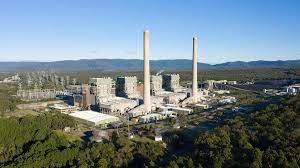 Eraring is expected to be the cause of much of the impairment, but the gas-powered generation (GPG) units did not fair much better. The GPG were affected due to the increased cost of gas and the decrease in the spot and contract electricity market price.
Strategically Origin has chosen to source renewable energy through PPA rather than build physical generation so are not exposed to the physical renewable market. Origin was an early mover in the renewable PPA space so the PPA’s on their books are very expensive compared to what the market offers are today. This has resulted in Origin writing down some of the value of these existing PPAs.
Origin says it will write down $995M in value of goodwill for these renewable PPA’s and the gas contracts that are out of the money. Origin expects the spot market price to be up to $20/MWh below where they previously anticipated the price to be.
Origin expect their FY2022 profits to be lower than expected at $450- 600M which will again be largely supported by the LNG export part of the business.
On a positive front, Origin expects the market to recover in FY2023 where earnings are expected to increase by $150-250M on the back of a material rebound in energy market earnings.
 sumer bodies, academics, government bodies and interested parties over the last two years. An options paper was released in April and the final advice is expected to closely reflect the options discussed.

 Six years after the establishment of the scheme was pledged at the end of 2015, China has begun operating the national carbon Emissions Trading Scheme (ETS). This started on 16th July 2021, with the opening price of the Carbon Emission Allowances (CEAs) reported at CNY 48 (AUD 10.01) per ton. The first trading day concluded with the closing price of CNY 51.23 (AUD 10.68) per ton, up 6.7%. The total trading volume reached 4.1 million tons at CNY 210 million (AUD 43.79 million).

 A constraint designed to maintain power flow in the Gladstone region, primarily to maintain the continuous current rating on the 132kV feeder bushing at Boyne Smelter, is constraining off hundreds of MWs in Queensland.