

On Friday, the Australian Energy Market Operator (AEMO) published its 2021 Inputs, Assumption and Scenarios Report (IASR) which includes five scenario’s which may take the industry into the future. The five scenarios range from the slow change where not much happens in relation to technology changes and the existing generation mix right through to the Hydrogen superpower where changes in technology make huge advancements. The scenarios outlined in the IASR will form part of the 2022 Integrated System Plan (ISP).
AEMO have spent the last 10 months working with industry, governments, and consumers to build the scenarios. During consultation, most stakeholders supported the rapid decarbonisation scenarios leading to achieving net-zero emissions.
Compared to the input to the 2020 ISP, the 2022 ISP will include economy wide decarbonisation not just across the electricity sector and increased investment in distributed energy resources. To model decarbonisation across the economy, the 2022 ISP will include scenarios of electrification across industry and the transport sector.
To understand how the market moves to a lower carbon world, AEMO have modelled a ‘steady progress’ scenario and a ‘net zero’ scenario. The steady progress scenario employs existing government policy including emission abatement targets and a steady growth in the uptake of PV. In the Net-zero scenario the change in the electricity industry is driven by technology led emission abatement and progressive tightening of emissions targets leading to net zero emission by 2050.
AEMO have also modelled a ‘Hydrogen superpower’ scenario where the market is structured to support the development of a renewable hydrogen export economy.
A draft ISP will be published in December with the final ISP released in June 2022.
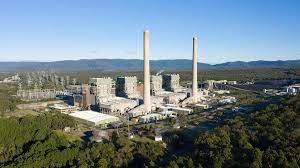 Eraring is expected to be the cause of much of the impairment, but the gas-powered generation (GPG) units did not fair much better. The GPG were affected due to the increased cost of gas and the decrease in the spot and contract electricity market price.
 sumer bodies, academics, government bodies and interested parties over the last two years. An options paper was released in April and the final advice is expected to closely reflect the options discussed.


 Six years after the establishment of the scheme was pledged at the end of 2015, China has begun operating the national carbon Emissions Trading Scheme (ETS). This started on 16th July 2021, with the opening price of the Carbon Emission Allowances (CEAs) reported at CNY 48 (AUD 10.01) per ton. The first trading day concluded with the closing price of CNY 51.23 (AUD 10.68) per ton, up 6.7%. The total trading volume reached 4.1 million tons at CNY 210 million (AUD 43.79 million).